|
|
|

All American
Like the rest of the country, New Yorkers are experiencing a resurgence of patriotic fervor. Basic black is now trimmed with red, white, and blue-making this a terrific time to rediscover American art. And New York museums boast some of the best collections in the country, from colonial portraits to Jackson Pollocks. Here are some suggestions for an all-American art tour, NYC-style.
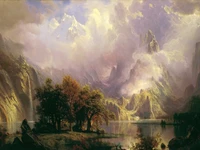
Brooklyn Museum of Art. There's no better place to start than the BMA, which recently reinstalled its impressive collection as the first phase of its new Luce Center for American Art. American Identities: A New Look rambles through some 12,000 square feet of gallery space, displaying close to 200 paintings, sculptures, and works on paper, bolstered by an array of related objects-everything from Native American craftwork to colonial silver and Tiffany glass. Organized around such themes as "Inventing American Landscape," "The Centennial Era," and "Modern Life," the exhibition features classic works like Albert Bierstadt's monumental A Storm in the Rocky Mountains-Mount Rosalie (1866) and Georgia O'Keeffe's Brooklyn Bridge (1948). There are a few unexpected pleasures as well, including William Merritt Chase's exotic painting, The Moorish Warrior (1878) and Heat (1919), Florine Stettheimer's collar-wilting evocation of a sizzling summer day. And don't miss The Mellow Pad (1945-51), Stuart Davis's ebullient jazz riff on canvas.
Museum of the City of New York. With Painting The Town-MCNY's permanent collection exhibition-American art takes on a decidedly local flavor, in 70 canvases exploring New York's changing cityscape from 1809 to 1997. Icons like the Statue of Liberty and the Brooklyn Bridge get their due, but more locally cherished landmarks-Katz's Delicatessen, an all-night mini-mart in Greenpoint, the old Sixth Avenue El station at Eighth Street-are lovingly depicted as well. Artists range from American Impressionist Childe Hassam to one-time courtroom artist Tom Christopher, whose Last Clock on Fifth Avenue (1996) captures the chronograph in question on a sharp-shadowed winter afternoon. Disappointed Yankee fans can console themselves with Paolo Corvino's nostalgic First Night Game, Yankee Stadium, May 28, 1946 (1969)-the Bronx Bombers lost that one, too, but went on to better things. And if it's the stuff of life you're after, check out The New York Century: World Capital, Home Town, 1900-2000, where paintings share space with everything from ceremonial groundbreaking shovels to the door from an old Checker cab.
New-York Historical Society. The N-YHS has been around since 1804, and has the art collection to show for it. Here you'll find late 18th-century portraits by Gilbert Stuart and Charles Wilson Peale, and majestic works by Hudson River School artists, including Thomas Cole's five-painting series The Course of Empire (1833-36) and Frederick Edwin Church's lush tropical fantasia, Cayambe (1858). In addition to an extensive collection of folk art, this is where you'll find all 431 surviving watercolors painted by John James Audubon for his Birds of America, on view in a rotating exhibition.
American Folk Art Museum. With a brand-new building and a name change (from the Museum of American Folk Art), the museum is broadening its scope to include contemporary outsider art and folk art from around the world-but the heart of its holdings is still its superb collection of American folk art. Come for old favorites like Girl in Red Dress with Cat and Dog (1830-35) by Ammi Phillips, or the Angel Gabriel tavern sign made in the early 1800s. Then discover newly acquired treasures like Young Woman of the Folsom Family (c. 1812-1821), an exquisite portrait by Henry Folsom, and a charming version of The Peaceable Kingdom-one of 62 painted by Edward Hicks in the mid-1800s. The museum also houses a study center dedicated to the work of outsider artist Henry Darger (1892-1973), and there's currently an exhibition of his works on view as well.
The Museum of Modern Art. With MoMA preparing for a move to temporary headquarters in Queens in mid-2002, the bulk of its vast holdings is already in storage or on loan-but the cream of the crop is on view through May in Collection Highlights. And while the exhibition is heavy on Monets and van Goghs, you'll still find American icons like Jasper Johns' Flag (1954-55), Robert Rauschenberg's Bed (1955), and Jackson Pollock's One (Number 31, 1950) (1950). Come June, when the museum is comfortably ensconced at MoMA QNS (in the old Swingline Stapler building), look for a new version of Collection Highlights with a similar roster of classic modern works.
Metropolitan Museum of Art. The Met's got an entire wing dedicated to American art and decorative arts, and there are gems scattered throughout-from John Singleton Copley's pensive portrait of the young Daniel Crommelin Verplanck (1771) to the dignified dowager of Mary Cassatt's Lady at the Tea Table (1885). Among the other attractions: seascapes by Winslow Homer and Martin Johnson Heade, glorious vistas by Albert Bierstadt, Frederick Edwin Church, and Thomas Cole, and sculpture by everyone from Augustus Saint-Gaudens to Frederic Remington. And don't miss John Singer Sargent's stunning portrait of Madame X (Madame Pierre Gautreau) (1884), which the artist himself called "the best thing I have done." For a 20th-century update, head across the museum to the Wallace Wing, where paintings by early modernists like Georgia O'Keeffe and Marsden Hartley, as well as mid-century abstractionists Willem de Kooning and Jackson Pollock, pave the way for works by Chuck Close and other contemporary artists.
Whitney Museum of American Art. Wrap up your tour at the Whitney for a wide-ranging look at how American art developed in the 20th century-and where it's headed next. Start out in the fifth floor galleries, showcasing works from the first half of the century. There, you'll see painters like George Bellows and John Sloan slip out from under the shadow of European art with works that vividly portray the pains and pleasures of modern American life. There are O'Keeffes aplenty, alongside works by fellow modernists John Marin and Marsden Hartley. And for Edward Hopper fans, the Whitney is nothing short of valhalla, with one entire gallery stocked with such quintessentially American works as Early Sunday Morning (1930) and Seven A.M. (1948). The story continues down on the second floor, where Pollock to Today features everyone from the famed dripster to Pop forefathers Jasper Johns and Robert Rauschenberg to contemporary art stars like Robert Gober and Ann Hamilton. On February 10, the second-floor exhibition vanishes, temporarily, to make room for the 2002 Whitney Biennial, which opens March 7. As usual, this year's edition promises to generate its share of controversy-and give an intriguing indication of where American art is headed these days.
back to the Museums Magazines Index
|